My Adventures in Tropical Open-World Games: From Pirate Seas to Zombie Islands
I still remember the first time I truly felt the virtual sun on my face, hearing digital waves crash against a shore while standing on the deck of my ship. It was 2024, and tropical open-world games had evolved far beyond simple vacation simulators—they'd become portals to impossible adventures where every palm tree hid a story and every coral reef concealed treasure. Over the years, I've sailed cursed seas, survived zombie outbreaks in paradise, and even tried to relax on vacations that went horribly wrong. These games aren't just about locations; they're about the freedom to explore worlds where danger and beauty exist in perfect, sun-drenched balance.
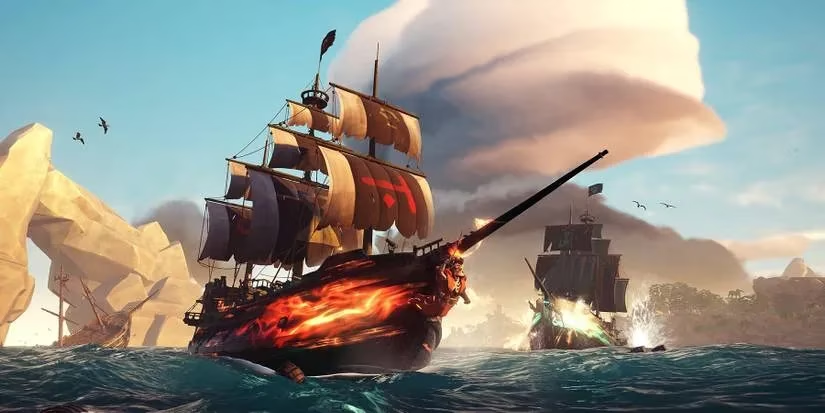
My most memorable tropical experience began with Sea of Thieves, which I played during its massive 2025 expansion. The game transformed from a fun pirate simulator into a living, breathing archipelago where every sunrise promised new chaos. What struck me wasn't just the visual beauty—though watching storms roll across turquoise waters remains breathtaking—but how the tropical setting shaped every interaction. The islands weren't just backdrop; they were characters. I remember one particular evening when my crew and I discovered a hidden cave system on an uncharted atoll, only to be ambushed by another player's galleon as we emerged with ancient artifacts. The tropical setting created this wonderful tension: serene beauty constantly interrupted by sudden violence. We'd be fishing peacefully one moment, then scrambling to man cannons the next as a skeleton fleet emerged from a rainbow-colored squall. The game's tropical world felt alive in ways few others manage, with dynamic weather systems that could turn a calm sea into a deadly maelstrom within minutes.
Then there was the time I traded my pirate hat for a makeshift weapon in Dead Island. Playing the Definitive Edition in 2026, I was struck by how the tropical resort setting amplified the horror. The contrast between what the island was supposed to be—a luxury paradise—and what it had become created this haunting atmosphere I've rarely experienced elsewhere. Wandering through overgrown golf courses where zombies still wore floral shirts, or searching abandoned bungalows while palm trees swayed gently in the breeze... it was unsettling in the best way. The tropical environment wasn't just scenery; it was part of the gameplay. I learned to use the geography to my advantage, luring infected tourists into swimming pools or setting traps in dense jungle areas. The recent sequel expanded this beautifully, adding more varied island biomes while keeping that core contrast between beauty and decay.
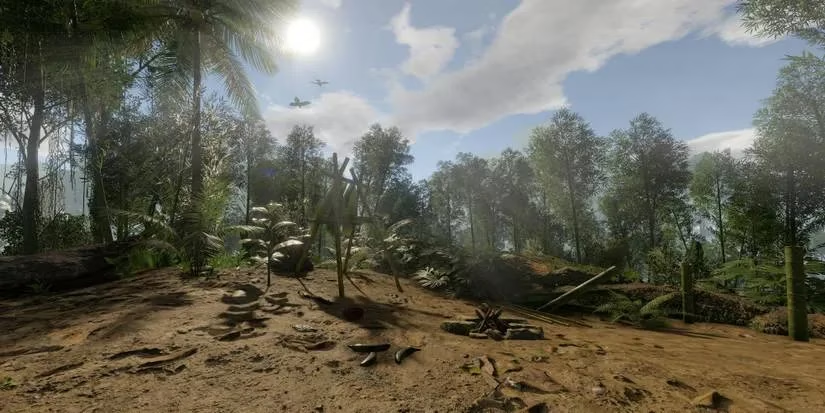
Survival games often use harsh environments, but Green Hell took this to another level entirely. When I played the VR-enhanced version last year, the Amazon rainforest stopped feeling like a game level and started feeling like a genuine opponent. The tropical setting here wasn't picturesque—it was oppressive, claustrophobic, and utterly magnificent. I remember spending real hours (in-game days) just trying to:
-
Identify which mushrooms were edible
-
Build a shelter that wouldn't collapse in the next rainstorm
-
Treat wounds that kept getting infected in the humid air
The learning curve was brutal but rewarding. What began as constant struggle gradually became a strange kind of harmony. By my third playthrough, I could navigate by specific bird calls, knew which plants indicated clean water sources, and had even managed peaceful encounters with some of the local tribes (added in the 2025 cultural update). The tropical environment here wasn't just challenging—it was educational. I genuinely learned real survival skills that, while I hope never to need them, gave me profound respect for how games can teach through immersion.
Sometimes, though, I wanted something lighter. That's when I discovered The Touryst, which felt like a love letter to tropical vacations gone wonderfully weird. Released on next-gen systems in 2024 with enhanced visuals, the game captured that specific feeling of arriving on a tropical island where everything seems slightly off in the most delightful way. The art style—blocky yet detailed—made every beach and ruin feel like a diorama come to life. I'd spend hours just hopping between islands, solving puzzles that ranged from clever to genuinely mind-bending, all while soaking in that permanent vacation vibe. What surprised me was how much content was packed into such a seemingly simple package. Beneath the bright colors and chill soundtrack lay surprisingly deep exploration mechanics and secrets that kept me coming back long after I'd "finished" the main story. In an era of hundred-hour epics, this tropical getaway reminded me that sometimes the most memorable adventures are the compact ones.
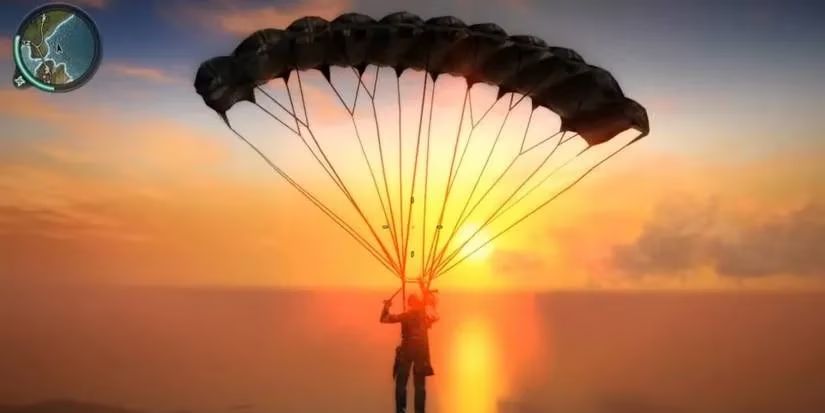
Of course, not all my tropical memories are peaceful. I'll never forget my first playthrough of Just Cause 2's remastered edition. The fictional island of Panau remains one of gaming's most delightfully absurd playgrounds. The tropical setting here served as the perfect canvas for chaos. I'd spend entire sessions just experimenting with the physics system, seeing how many vehicles I could tether together before attempting to fly them over a volcano. The environment responded to everything with glorious exaggeration—palms trees bent dramatically during explosions, waterfalls could be redirected with enough C4, and every cliff face invited base jumping. What made Panau special wasn't just its beauty (though sunsets over the South China Sea-inspired waters were stunning) but how every part of the island encouraged playful destruction. The tropical setting amplified the fun because the contrast between serene landscapes and absolute mayhem was so pronounced.
Then there are the games that blend history with tropical fantasy. Assassin's Creed Black Flag remains unmatched in this regard, especially with the 2026 graphical overhaul that made the Caribbean waters more breathtaking than ever. Sailing my ship, the Jackdaw, through storms while shanties played in the background created moments of pure magic. But beyond the romance, what impressed me most was how the tropical setting shaped the gameplay systems. Naval combat wasn't just tacked on—it felt integral to navigating this specific world. The islands weren't just fast travel points; they were living ports with their own economies, secrets, and stories. I remember spending one entire playthrough mostly ignoring the main story, instead becoming a trader who occasionally dabbled in piracy. The tropical archipelago allowed for this kind of emergent storytelling in ways that urban settings rarely do. Every cove could hide a shipwreck to plunder, every calm bay might conceal a British fleet, and every island promised both danger and opportunity.
Finally, Far Cry 3 taught me that tropical paradises can be terrifying. Revisiting the Rook Islands in the 2025 VR adaptation was a genuinely intense experience. What had been beautiful in 2012 became overwhelming in virtual reality—the jungle felt suffocating, the beaches isolating, and Vaas's compound genuinely frightening. The tropical setting here served as the perfect psychological backdrop for Jason Brody's transformation. As I progressed, my relationship with the islands changed. Early on, I saw them as a prison to escape. By the end, I understood them as a crucible that forged something new. The gameplay systems reinforced this: learning to hunt, craft, and navigate the environment wasn't just about survival—it was about becoming part of the ecosystem. The tropical world wasn't separate from the story; it was the story.
Looking back across these experiences, I've come to appreciate why tropical open-world games hold such special appeal:
| Game | What the Tropical Setting Added | My Most Memorable Moment |
|---|---|---|
| Sea of Thieves | Dynamic weather affecting gameplay, islands as social hubs | Surviving a kraken attack during a perfect sunset |
| Dead Island | Contrast between paradise and horror | Finding a survivor journal in an overgrown tiki bar |
| Green Hell | Environmental learning curve | Successfully treating malaria with found plants |
| The Touryst | Relaxed exploration with hidden depth | Solving the lighthouse puzzle as dolphins jumped offshore |
| Just Cause 2 | Playground for physics-based chaos | Tethering a plane to a moving bus (it went poorly) |
| AC: Black Flag | Integrated naval exploration | Discovering a hidden Mayan temple underwater |
| Far Cry 3 | Psychological transformation backdrop | Burning down a marijuana field with a flamethrower |
Each game used its tropical setting not as mere decoration but as a core gameplay element. The humidity affected weapon durability in Green Hell, the ocean currents mattered in Black Flag, and even the day-night cycles in Dead Island changed zombie behavior. These aren't games that happen to be set in the tropics—they're games about being in the tropics.
As we move further into this decade, I'm excited to see how developers continue to innovate within these sun-soaked worlds. Recent advancements in climate simulation and AI-driven ecosystems promise even more dynamic tropical environments. Maybe we'll see games where coral reefs grow and die based on player actions, or where entire island cultures evolve through interactions. What makes tropical open-world games so enduring isn't just their beauty—it's their potential. Between the palm trees and crystal waters lie infinite stories waiting to be discovered, and I can't wait to dive into the next one.