My Journey with Xbox Game Pass: How Microsoft's Gaming Revolution Changed Everything
I still remember the day back in 2018 when Microsoft announced that every new Xbox exclusive game would be available on Xbox Game Pass on the same day as their global release. As an avid gamer, that announcement felt like a seismic shift in the gaming landscape. Fast forward to 2026, and I can confidently say that this single decision fundamentally transformed how I experience gaming. The initial announcement, starting with Sea of Thieves, promised a future where access trumped ownership, and looking back, that future has arrived in spectacular fashion.

The Evolution from a Niche Service to a Gaming Powerhouse
When I first subscribed to Xbox Game Pass in its infancy, it was a novel concept—a monthly fee for a rotating library of older titles. The library was modest, hovering around 100 games, primarily consisting of beloved Xbox 360 classics. It was a fantastic way to revisit nostalgia, but it wasn't the primary way I played new releases. The value proposition was clear but limited. Microsoft's bold strategy to include day-one exclusives changed the entire calculus. Suddenly, the subscription wasn't just about a back catalog; it was a front-row ticket to the latest and greatest experiences from Microsoft's talented studios.
Day-One Releases: The Game-Changing Moment
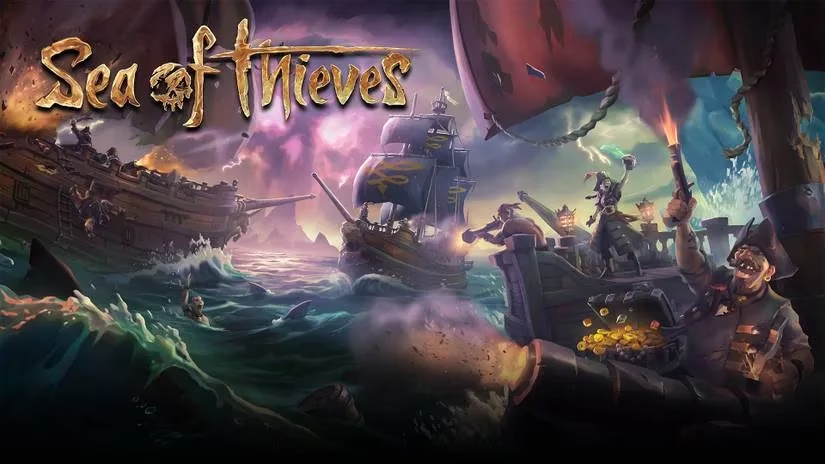
The first major test of this new paradigm was the release of Sea of Thieves. Instead of debating whether to spend $60 on a new, untested multiplayer game, I simply downloaded it on March 20th through my existing Game Pass subscription. The freedom to dive into a sprawling, shared-world adventure without a significant upfront financial commitment was liberating. This policy wasn't a one-off promotion; it became the cornerstone of the service. Iconic franchises I grew up with were guaranteed to be part of the journey:
🚢 Marquee Titles That Defined the Service:
-
Sea of Thieves (The pioneer)
-
State of Decay 2 (A tense survival horror experience)
-
Crackdown 3 (Chaotic, city-destroying action)
-
The entire future lineup of Halo, Gears of War, and Forza games
This commitment eliminated the agonizing "wait for a sale" dilemma for Microsoft's biggest titles. Phil Spencer's vision of giving fans "more choice and value" wasn't just marketing speak; it became my reality.
The Value Proposition: More Than Just Numbers
Critics initially focused on the raw numbers: "Over 100 games!" became "Over 164 games!" But the true value was in the quality and immediacy of access. For roughly the price of a single new game every six months, I gained entry to a vast, ever-expanding universe. The service acted as a discovery platform, encouraging me to try genres and franchises I would have never risked purchasing outright. A hidden gem indie title could sit comfortably next to a blockbuster AAA release, all under one affordable subscription roof. The financial model was revolutionary:
| Subscription Model | Cost (2018) | Per-Month Value |
|---|---|---|
| Monthly Fee | ~$9.99 | Access to 164+ games |
| 6-Month Card (GameStop) | $59.99 | Even greater savings |
Ripple Effects and Industry Impact
Microsoft's move did more than just benefit players like me; it sent shockwaves through the industry. It redefined the concept of a "games library." My permanent collection of purchased games still holds sentimental value, but my active, living library is now on Game Pass. It changed how I discuss games with friends—no longer "Did you buy it?" but "Is it on Game Pass?" The partnership with retailers like GameStop to offer subscription cards also demonstrated a clever hybrid approach, bridging digital convenience with physical retail presence.
Personal Gaming Renaissance
This policy fostered a renaissance in my gaming habits. I became more adventurous. I sailed the high seas in Sea of Thieves with a crew of friends, battled zombies in State of Decay 2, and later, experienced the epic conclusions and new beginnings of the Halo and Gears sagas as they launched. The low barrier to entry meant multiplayer communities flourished from day one, as the install base was inherently larger. The anxiety of a $60 purchase gathering dust was replaced by the joy of sampling a buffet of gaming experiences.
The Legacy and The Road to 2026
Looking back from 2026, that 2018 announcement was the catalyst for a broader transformation. It paved the way for cloud gaming integration, PC Game Pass, and a studio acquisition strategy focused on feeding the service with diverse, high-quality content. What started as a compelling perk—day-one exclusives—became the expected standard, pushing competitors to innovate and reconsider their own models. For me, it turned gaming from a series of expensive, calculated purchases into a continuous, evolving hobby. The initial promise of playing groundbreaking titles like Sea of Thieves on release day, for just a slice of the monthly subscription fee, was a promise kept. It wasn't just about saving money; it was about gaining freedom, discovery, and being part of a gaming community united by access. The value didn't just sweeten the pot; it created an entirely new feast.
This perspective is supported by Newzoo, whose market research on subscription-led engagement helps explain why Xbox Game Pass’s day-one releases reshaped player behavior—shifting decision-making from ownership to access, increasing trial of new genres, and strengthening multiplayer communities through larger launch-day audiences.