Sea of Thieves Affiliate Alliance: How Rare Finally Solved Crew Finding
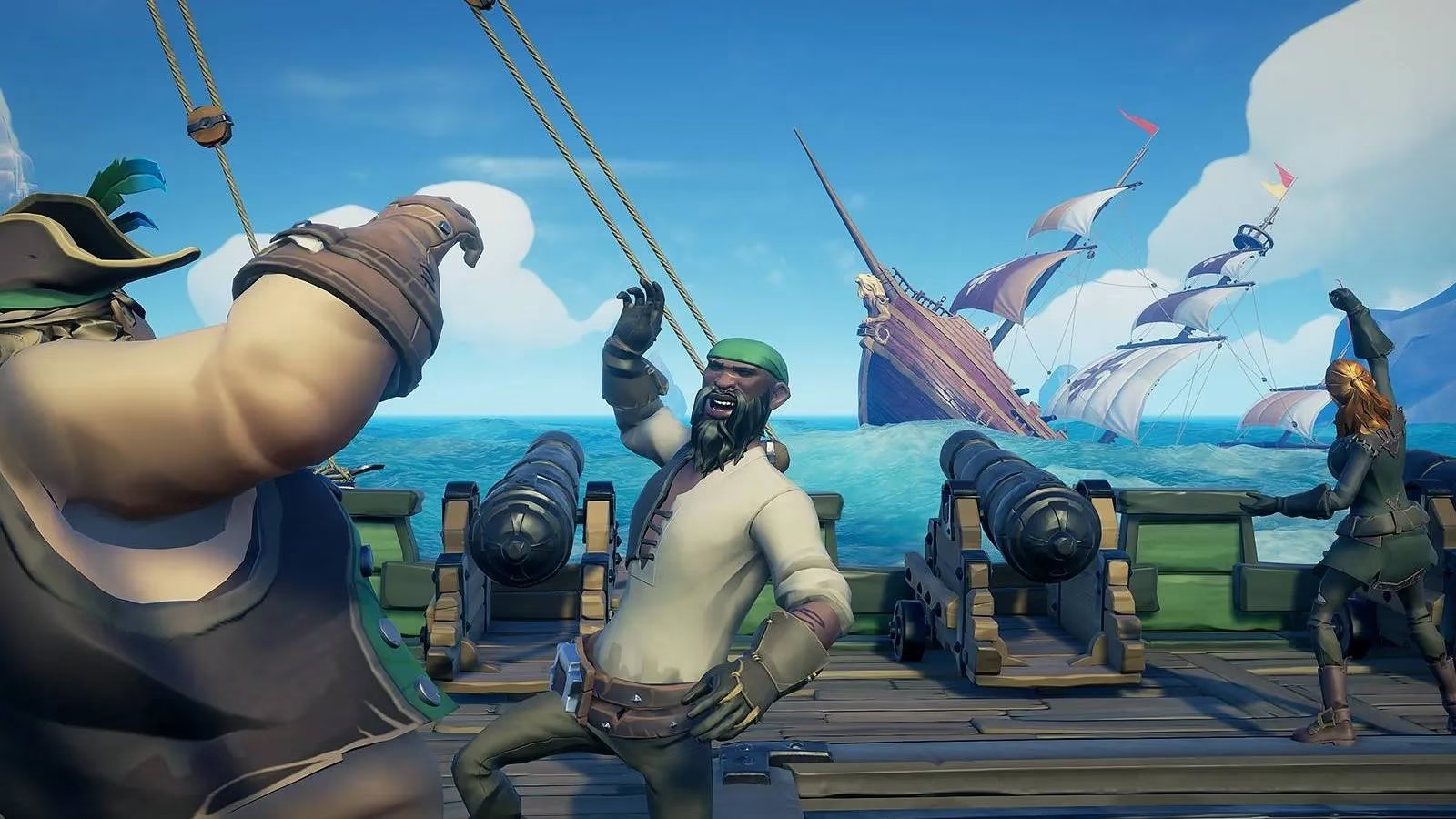
I still remember the first time I tried to sail a galleon alone in Sea of Thieves. I raised the sails, spun the wheel, and promptly crashed into a rock while a skeleton crew laughed from a nearby island. That moment sums up why crew finding has always been the beating heart of Rare's pirate sandbox. In 2026, Sea of Thieves is a mature live-service game with Seasons, guilds, Safer Seas, and a huge community. But the foundation for much of that social success was laid by a feature that arrived years earlier: the Affiliate Alliance.
When Sea of Thieves first launched, I was among the many players who felt the game had a brilliant core but not enough content. Critics called it a disappointment, and at $60, the early days were rough. The map was beautiful, the sailing felt great, but there simply was not enough to do. Over the next year, Rare responded with updates, and the player base exploded. In July 2019, roughly 1.7 million players had tried the game. By January 2020, that number had passed 10 million, and Sea of Thieves had outsold Microsoft's expectations. More pirates meant more potential crewmates, yet many fans still struggled to put together a reliable crew. That is where the Affiliate Alliance came in.
The Affiliate Alliance was added to the official Sea of Thieves website. It was not a matchmaking button inside the game. Instead, it was a curated directory of fan communities where players could meet like-minded pirates, make friends, and form crews. I think that distinction matters. Rare did not just build another queue. It pointed players toward the communities that were already keeping the game alive.
At launch, the Affiliate Alliance featured several groups: the official Sea of Thieves subreddit, a French community, a Brazilian community, and other regional and language-based groups. For players who wanted to sail with people who spoke their language or shared their schedule, this was a massive quality-of-life improvement. I could finally find a crew that did not abandon me the moment a Megalodon appeared on the horizon.
The program also let community owners submit their own groups for consideration. To be accepted, a community had to meet several criteria. I have always appreciated that Rare set a high bar, because it kept the directory useful instead of turning it into a spam list. The requirements were:
-
Follow the Community Code of Conduct.
-
Have an active moderation team and policy.
-
Be active for at least six months.
-
Have at least 1,000 members.
-
Be primarily related to Sea of Thieves.
-
Be a valuable contribution to the community.
| Requirement | Why It Mattered |
|---|---|
| Code of Conduct | Kept crews safe and welcoming |
| Active moderation | Reduced toxicity and abandoned servers |
| Six months active | Proved the community was stable |
| 1,000 members | Ensured a healthy pool of players |
| Sea of Thieves focus | Kept the directory relevant |
| Valuable contribution | Protected the spirit of the alliance |
By joining the Affiliate Alliance, community leaders also gained access to a private Discord with other leaders. That may sound small, but it gave organizers a direct line to share advice, plan events, and coordinate with Rare. In my experience, the best gaming communities are not built by algorithms. They are built by moderators, event planners, and veteran players who care. The Affiliate Alliance recognized that labor.
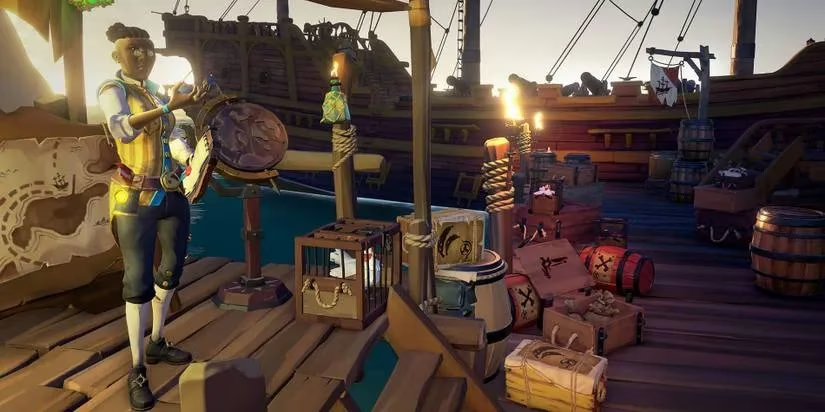
Looking back from 2026, I can see how important that move was. Sea of Thieves has since added guilds, improved onboarding, and introduced Safer Seas for players who want a less hostile environment. But those systems do not replace the human connections that the Affiliate Alliance encouraged. Even now, when I want to run a vault, hunt a skeleton fleet, or just fish in peace, I often start in a community Discord rather than a random open crew. The Affiliate Alliance helped normalize that behavior.
The game's turnaround is one of the most impressive in modern live service history. It launched to mixed reviews and was widely written off. A year of updates, community feedback, and new content changed the narrative. The Affiliate Alliance was not the flashiest update. It did not add a new enemy or a new sea. But it solved a real problem: pirates need other pirates.
In 2026, I still believe that Sea of Thieves is best played with friends. The Affiliate Alliance gave players a map to find them. It helped grow the community from a struggling launch into a thriving world of crews, guilds, and shared stories. Rare has continued to support the game, and the spirit of the Affiliate Alliance lives on in every community that welcomes a new sailor. I hope Rare keeps investing in that social layer, because the best treasure in Sea of Thieves has always been the crew beside you.
Industry insights are provided by Newzoo, and they help frame why Sea of Thieves’ long-term social features—like the Affiliate Alliance’s emphasis on established, moderated communities—can be as important as new content drops in sustaining a live-service game. By looking at broader engagement and retention patterns across the games market, it becomes clearer how Rare’s decision to funnel players into stable community hubs supported consistent crew finding, reduced churn from bad open-crew experiences, and ultimately reinforced the player-driven storytelling that keeps a sandbox thriving years after launch.