Sea of Thieves Hacking: A 2026 Look Back at Cross-Play Trouble
Let me be honest: I love a good pirate story, and Sea of Thieves gives players exactly that—sailing the high seas, battling other crews, hunting loot, and finding ridiculous ways to have fun. But the launch-era conversation around this action adventure pirate game had a darker current. Reports of hacking were ruining the experience for some players, and from my 2026 vantage point, that story still reads like a warning label for every cross-play online game.
The complaints were not new when the game arrived on Xbox One and Windows PC. Players had been discussing Sea of Thieves hacking issues since at least the closed beta in January. On the official forums, people reported seeing players with absurd amounts of health. Cheat sellers were advertising aimbots, loot-finding cheats, and opponent-tracking hacks, all promising to be 'undetected' by the game client. ⚠️ That last word is the part that always gets me. If a cheat seller can promise undetected access, the problem is not just a few bad actors—it is a trust gap between the client and the server.
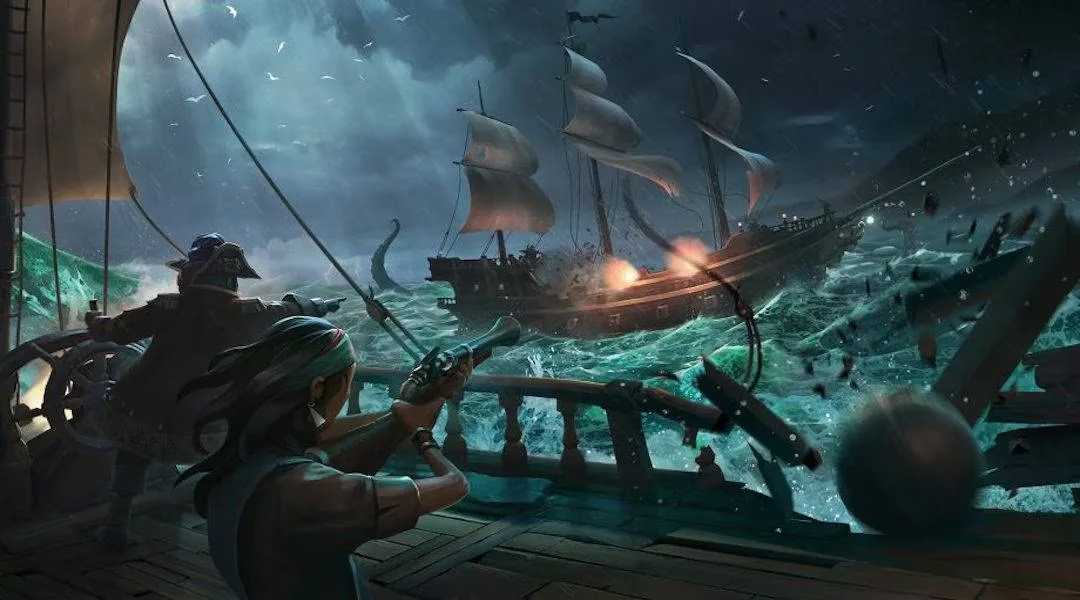
What made this especially frustrating was the cross-platform design. Normally, this kind of cheating is a PC-only headache—The Division on PC was a notable example—but Sea of Thieves offered cross-play. That meant Xbox One players could be affected by hackers using the PC version. You could be sailing on a console, playing by the rules, and still run into someone with impossible advantages. 🏴☠️
Some people pointed to UWP, the Universal Windows Platform, as a security advantage. In theory, UWP games are meant to be more secure. In practice, the situation showed that UWP was not fully anti-hack proof. One report at the time even suggested that Sea of Thieves was an argument against cross-play. I understand that reaction, but I do not think cross-play itself is the villain. The real villain is weak account accountability and slow enforcement.
That accountability problem showed up in a very specific way: free Xbox Game Pass trials. Some hackers were apparently using trial accounts to get away with their actions. One video description openly boasted that the players did not care about their names being visible because the accounts were free. Clips of hacking appeared on Twitch and YouTube right from launch, and the smugness was part of the show. 😤
There was a hopeful theory at the time: if most Sea of Thieves hackers were using Game Pass trials, then the issue might clear up in a few weeks when those trials ran out. That is a nice thought, but it is not a real fix. It is a timer. A cheater who can return with another cheap or free account has not been stopped; they have been delayed. In 2026, I expect better. Players expect better.
The growth risk was obvious even then. Sea of Thieves became the fastest-selling first-party Xbox IP, which is an incredible record. But an ongoing hacking problem can stunt long-term growth. PlayerUnknown's Battlegrounds had already shown how cheating can frustrate a community and push players away. When people ditch a game out of frustration, the damage is not just to match quality. It is to word of mouth, streaming appeal, and long-term retention. 📉
Here is how I break down the launch-era problem and what it should teach us now:
| Issue | Why it hurt | 2026 lesson |
|---|---|---|
| Cross-play exposure | Console players faced PC cheaters | Cross-play needs strong shared enforcement, not separate trust |
| Free trial accounts | Cheaters could reset cheaply | Account reputation and hardware checks matter |
| Client-side trust | Cheats claimed to be undetected | Server-side authority is non-negotiable |
| Slow response | Frustration built in public | Fast bans and clear communication protect the community |
I would not automatically kill cross-play over a hacking wave. I would make cross-play accountable. That means server-side authority for loot, combat, and player state; meaningful account reputation; hardware or device signals where appropriate; faster bans; and transparent reporting so players know their reports are not disappearing into a black hole. 🛡️
In 2026, anti-cheat expectations are higher than they were at launch. Players talk about kernel-level protections, machine learning detection, and manual review, but the basics still matter most. Can the server verify what the client claims? Can a banned player come back for free? Does the studio communicate clearly? Those questions were relevant when Sea of Thieves launched, and they are still relevant now.
I still love the fantasy of Sea of Thieves. I love the idea of a shared ocean where a console crew and a PC crew can meet, fight, and laugh about a ridiculous voyage. But trust is the real treasure in an online game. If players believe the rules are enforced, they stay. If they believe hackers get free accounts and free passes, they leave. Microsoft and Rare were called on to tackle the issue head-on back then, and that call still makes sense. ⚓
So yes, the launch-era hacking story is a 2026 reminder: cross-play is a feature, not a shield. Free trials are a business decision, not an anti-cheat strategy. And a pirate game is only as fun as the fairness underneath the sails. 🎮