Sea of Thieves Harassment Case: Rare Punishes Victims, Community Fights Back
In the turbulent waters of Sea of Thieves, a storm was brewing that had nothing to do with skeleton ships or rival pirate crews. It centered on Rocco, a puppet streamer operated by a gaming couple on Twitch. The couple had reported harassment that they endured during their own Sea of Thieves live streams, and initially it seemed as though developer Rare had listened. According to Rare, action was taken against some of the harassers involved. But instead of bringing peace, that response opened the door to something even uglier. A second wave of abuse arrived, much of it misogynistic and ableist in nature, and the situation only escalated over the following months.
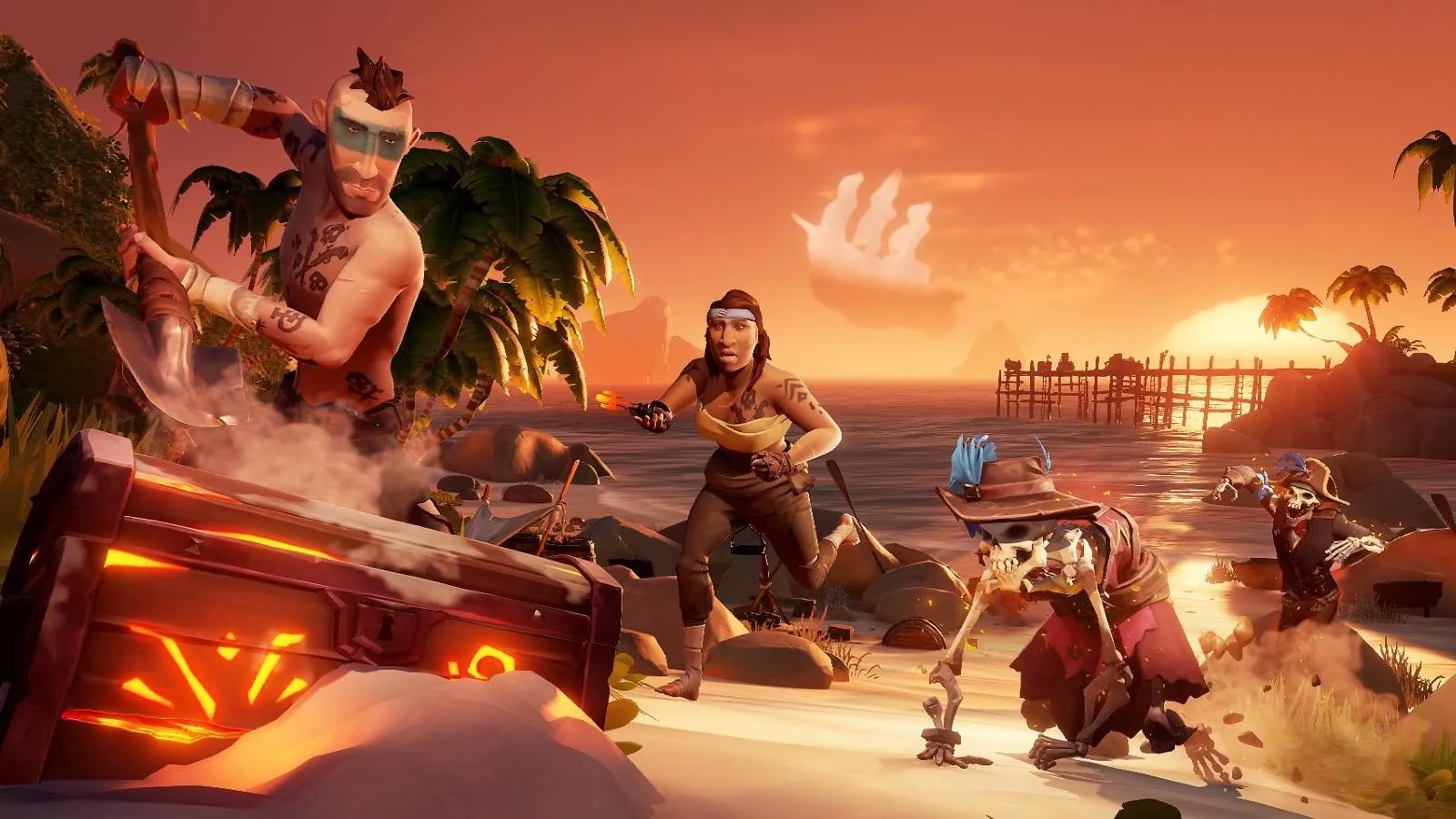
For many players, Sea of Thieves had never been about a cinematic launch or a single-player power fantasy. It grew slowly after release and built a loyal community that prized player interaction above almost everything else. That strength, however, turned into a vulnerability when those interactions became a channel for sustained harassment. When the developers seemed unable to stop the abuse, the victims found themselves caught in a brutal paradox: reporting harm appeared to invite more harm.
The breaking point came when Rocco's creators publicly called Rare developers 'monsters' for how they handled the complaints. The comment was harsh, born from fear and frustration, but what followed stunned much of the community. Rare removed the couple from the Sea of Thieves Partner Programme, a move that many interpreted as punishing the victims rather than resolving the underlying problem. The decision ignited immediate backlash.
⚓ A Community Chooses Sides
A wave of fellow Sea of Thieves streamers stepped forward. Jason Sulli, Carrillo, and Gullible Gambit all voluntarily left the same Partner Programme in protest. Their departure sent a clear signal that they stood with Rocco's creators and against what they saw as a short sighted response from Rare. The community now faced a difficult question: if content creators cannot call out a company's failures without losing their status, how safe can any of them feel?
Behind the scenes, the situation appeared even more troubling. Reports indicated that former and current Rare employees had been discouraged from taking a public stance on the issue. Those few who did speak out reportedly faced varying levels of pushback, including alleged threats of losing their jobs. That detail added a chilling layer to the story. It was no longer just a matter of in-game harassment or a company's public relations misstep. It began to look like a culture that punished open conversation at multiple levels.
🏴☠️ The Unanswerable Question
Was Rare's initial action enough? That question remained impossible to measure. No public dashboard could show whether the harassers stopped or whether the victims felt safe. The only observable fact was that Rocco's operators continued to feel threatened, and their removal from the Partner Programme did nothing to change that feeling. If anything, it deepened their isolation. Observers could only make their own judgments, and those judgments were all over the map. Some believed Rare had acted in good faith and was now being unfairly attacked. Others saw a pattern of victim blaming, where an accusation made in anger was met with an institutional punishment rather than a meaningful investigation.
For those trying to follow the timeline, the key moments were hard to miss:
-
🟠 Rocco's operators reported abuse experienced during live streams.
-
🟠 Rare said action had been taken against some of the harassers.
-
🟠 Harassment escalated, becoming more misogynistic and ableist.
-
🟠 Rocco's creators released a public statement documenting the saga.
-
🟠 They called the developers 'monsters' for their handling of the case.
-
🟠 Rare removed them from the Partner Programme.
-
🟠 Several other streamers left the programme in solidarity.
-
🟠 Reports emerged of employees being silenced or threatened.
❓ A 2026 Reflection
Years later, this case still serves as a warning. By 2026, the gaming industry had seen many more debates about moderation, harassment, and platform responsibility. Yet the core questions from the Sea of Thieves controversy have not disappeared. What does a studio owe to the people who build its community? How should companies respond when their own policies are criticized by those same people? Can a developer stay neutral when neutrality starts to look like punishment?
The Sea of Thieves community learned that those questions are not just theoretical. They are lived by real people, often in front of an audience, with real consequences. The saga was far from over when the story first broke, and its echoes would continue to shape how players thought about safety, solidarity, and accountability on the shared seas.