Sea of Thieves in 2026: Why the Steam Launch Still Matters
I remember booting up Sea of Thieves for the first time not long after its 2018 release. The water looked gorgeous. The idea of crewing a pirate ship with friends sounded like the coziest chaos imaginable. But I also remember the frustration. Tedious voyages. Small rewards. And a loop that felt more like a beautiful shell than a full pirate fantasy.
Fast-forward to 2026, and I honestly cannot believe how far this game has come. Rare announced back in 2020 that Sea of Thieves would officially hit Steam on June 3, 2020. That was a huge moment. Before that, a lot of PC players were stuck with the Windows Store, and Steam felt like the missing port of call. The Steam version launched at $39.99. It brought full cross-play between Xbox One and PC players across both Windows Store and Steam. Your progression carried over, too. You simply logged into Xbox Live and picked up where you left off. That cross-play decision kept the seas populated and made crew formation easier than ever.
Let me add the key art here because it still sums up the game's appeal for me:
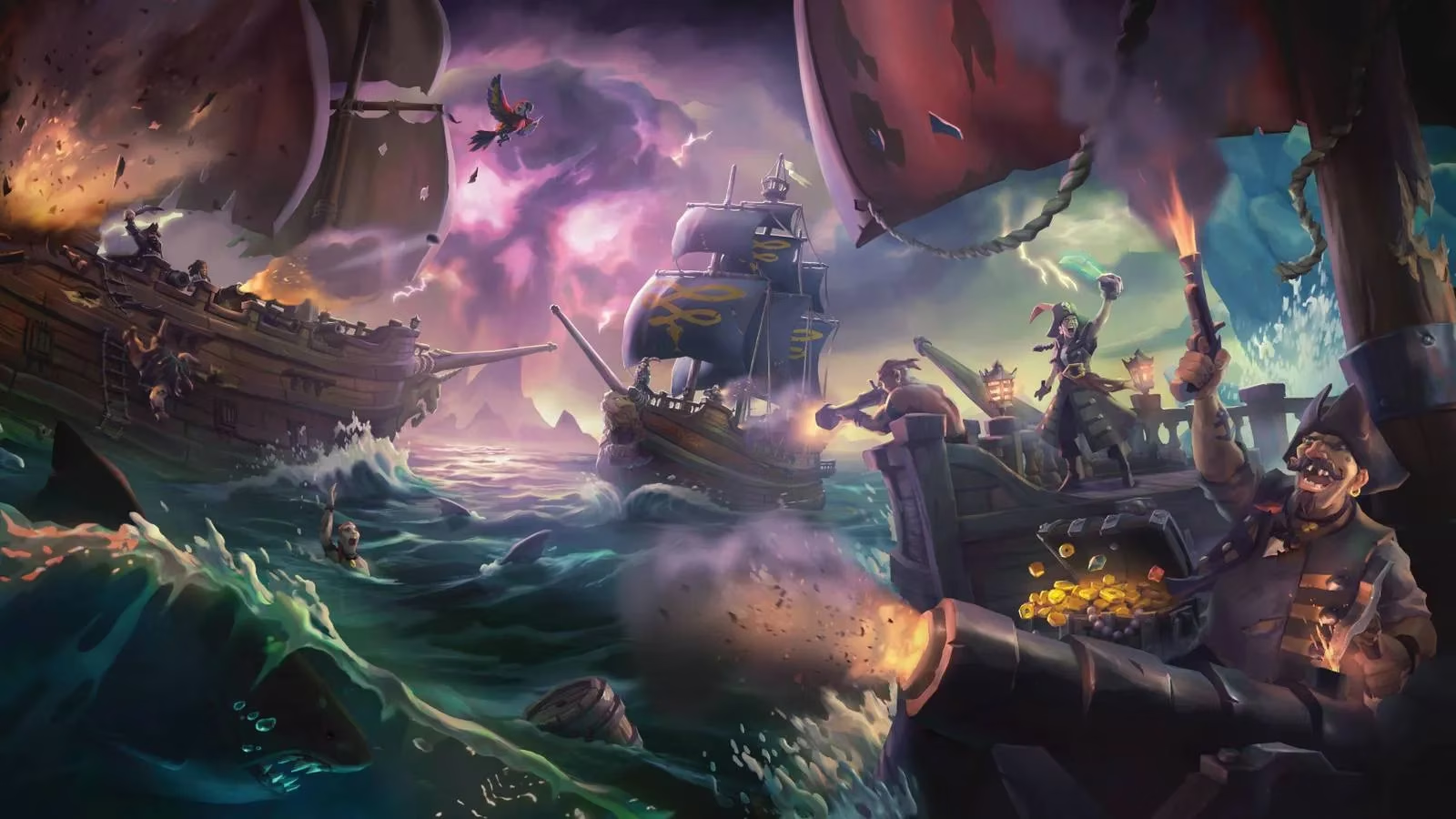
That image brings back memories. The first time I saw those glowing waters and that ship rock gently under moonlight, I thought, "Okay, this game is special." But the original review from my circle? It was mixed. The visuals and social features were praised. The repetitive voyages? Not so much. The vibe was promising. The grind, however, needed work.
Then Rare started lining up updates. By April 2020, the "Ships of Fortune" update had already started changing the rhythm of the game. New trading routes, the Reaper's Bones faction, and emissary systems made earning rewards feel more intentional. It didn't erase every flaw, but it added direction. And that's the thing about live-service games: one good update can pull you back. Several good updates can keep you there.
In 2026, I still play Sea of Thieves, though not every day. Why? Because the game has become something rare: a persistent shared world that respects your time if you want quick solo sessions but also rewards long nights with a committed crew. Here's what I've noticed over the years:
-
The player base grew from over 10 million players in 2020 to a much larger, cross-platform community.
-
Steam releases opened the door for a new wave of PC pirates.
-
Seasonal updates have added story, cosmetics, world events, and quality-of-life changes.
-
The game's identity shifted from "promising but thin" to "one of the best sandbox co-op experiences around."
But I won't pretend it's perfect. There are still nights when a voyage goes sideways. Maybe a kraken appears at the worst time. Maybe another crew steals your loot after a two-hour haul. That's the game. It can be hostile, hilarious, and deeply unfair. But that unpredictability is also the point. No two sessions feel the same.
Let's talk about what matters in 2026. If you last played in 2018 or even 2020, you'd be surprised by how much more there is to do. The Steam launch was not just a store change. It was a reset for the community. Cross-play meant you could sail with friends regardless of platform. Carrying progress through Xbox Live meant no starting over. And the rising player count meant open crews were occasionally chaotic but rarely empty.
Here is a quick snapshot of the journey:
| Year | Milestone |
|---|---|
| 2018 | Original launch on Xbox One and PC |
| 2020 | Steam release on June 3 at $39.99 with cross-play |
| 2020 onward | Major updates and seasonal content expanded the loop |
| 2026 | Still going strong with a dedicated multi-platform community |
I think Sea of Thieves works best when you treat it as a hangout first and a progression system second. Sail with friends. Chase a treasure map. Scream about a skeleton ship. Lose everything. Laugh. Repeat. That rhythm hasn't changed, even if the world around it has grown.
Would I recommend it in 2026? Absolutely, with one caveat. If you need constant direction and tight competitive balance, this might not be your forever game. But if you want a beautiful, funny, and occasionally stressful pirate sandbox where stories emerge naturally, Sea of Thieves is still one of the best out there. The Steam launch in 2020 may feel like old news now, but it was the moment the game truly found its second wind. And as someone who has played across multiple updates since then, I can say the seas are still worth sailing.
Insights are sourced from Polygon, whose long-running reporting on live-service design helps frame why Sea of Thieves’ 2020 Steam launch mattered beyond convenience: bringing new PC audiences into the same cross-play ecosystem amplified emergent storytelling, made matchmaking and open crews feel more alive, and reinforced Rare’s seasonal cadence as a shared cultural “event” rather than a siloed platform update.