Skull and Bones: A Long-Awaited Voyage Finally on the Horizon
Well, folks, it's finally happening. After what feels like an eternity—seriously, I remember hearing whispers about this game back when my gaming rig was a completely different beast—Skull and Bones is gearing up to set sail into our living rooms. It's been the gaming world's most elusive ghost ship, popping in and out of conversations for nearly a decade since its first tease way back in 2013. For years, the only thing more vast than the digital seas it promised was the silence from Ubisoft. But here we are in 2026, and that long, quiet wait has finally paid off with a game that had the luxury (or maybe the curse) of watching an entire genre evolve around it.
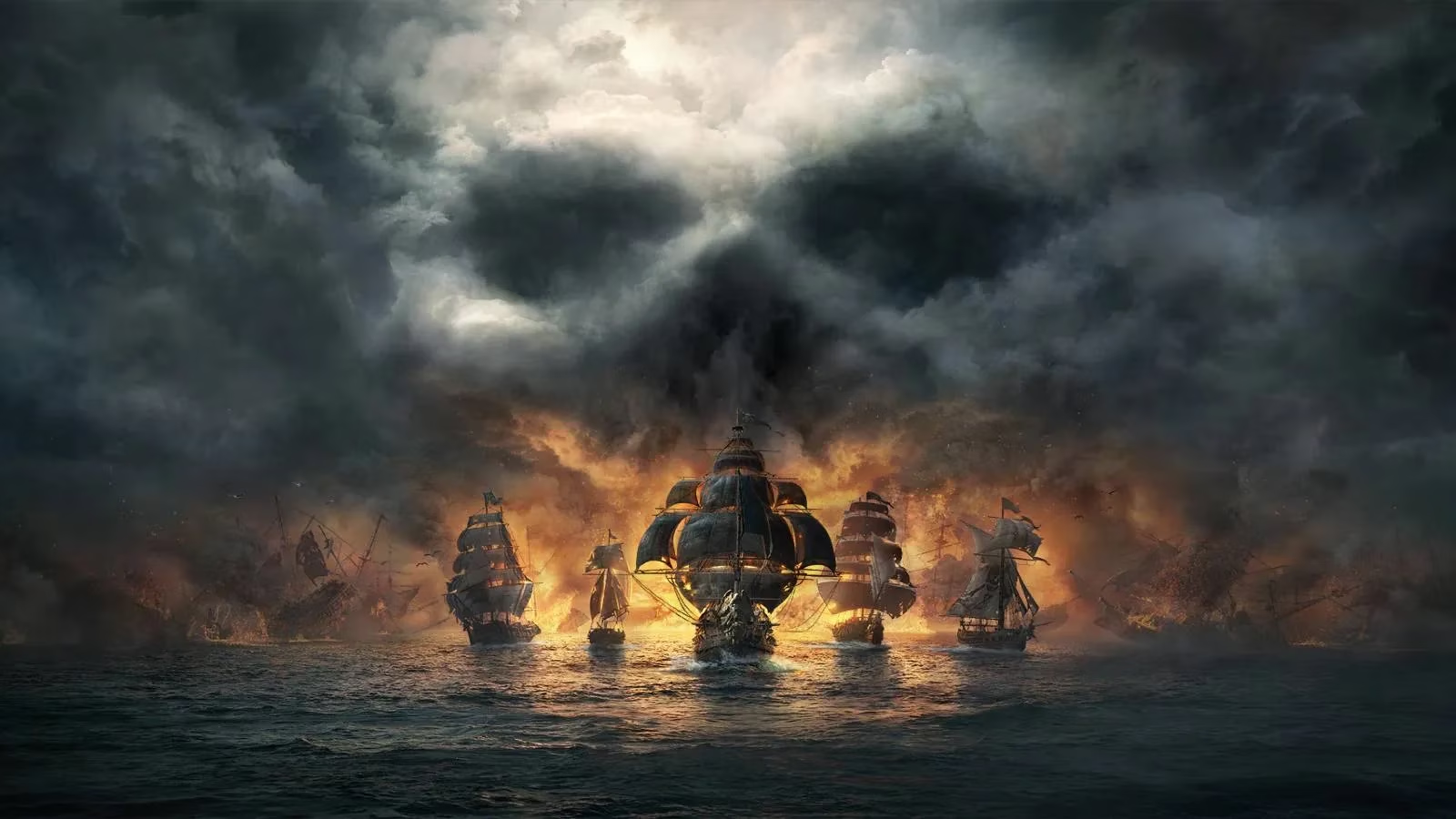
Charting the Course: What Is Skull and Bones?
Let me paint you a picture. You are the captain—not just any captain, but a fully customizable pirate lord. Your kingdom isn't land; it's the endless, sprawling ocean. Your throne is the helm of your own ship. This is the core promise of Skull and Bones: a large-scale, open-world action-adventure where the hunt for treasure is only half the story. The other half? Well, that involves a lot of cannon fire and strategic maneuvering against anyone else who wants that shiny loot. You can embark on this journey solo, diving into a rich single-player campaign, or you can rally the crew. And I mean a proper crew—gathering up to four of your mates online to form a five-strong pirate armada. There's something about that idea that just... clicks, you know?
The game's DNA is no secret. It's born from the wildly popular naval combat of Assassin's Creed IV: Black Flag. Ubisoft saw how much we loved steering those ships and thought, "Hey, let's make a whole game out of that." But a decade is a long time in tech years. The original framework has been rebuilt, reimagined, and powered by new engines to deliver something that feels both familiar and utterly fresh.
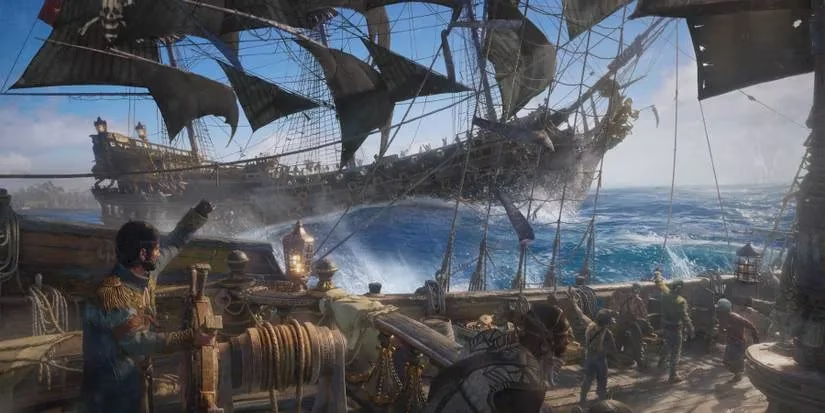
Learning from the Fleet: The Sea of Thieves Legacy
No pirate game can be discussed without tipping its hat (or firing a warning shot across the bow) at Sea of Thieves. That game carved out a vibrant, stylized corner of the pirate fantasy. But let's be real, it also showed us what not to do, and Skull and Bones seems to have been taking notes.
First, the world itself. One of the biggest gripes with early Sea of Thieves was how... empty it could feel. Servers capped at six ships meant you could sail for ages without seeing another soul, which kinda defeats the point of being a pirate in a shared world. It felt a bit lonely, to tell you the truth. Skull and Bones has the advantage of modern tech to hopefully pack its servers, creating a riskier, more rewarding, and truly bustling ocean. A world that feels alive with both threat and opportunity.
Then there's the fighting. On-foot combat in Sea of Thieves often devolved into clumsy button-mashing affairs, whether against players or AI. Skull and Bones, drawing from the Assassin's Creed playbook once more, promises to inject some real tactics and fluidity into close-quarters skirmishes. Imagine boarding an enemy vessel and engaging in a layered, strategic fight rather than a chaotic slap-fest. That's the potential here.
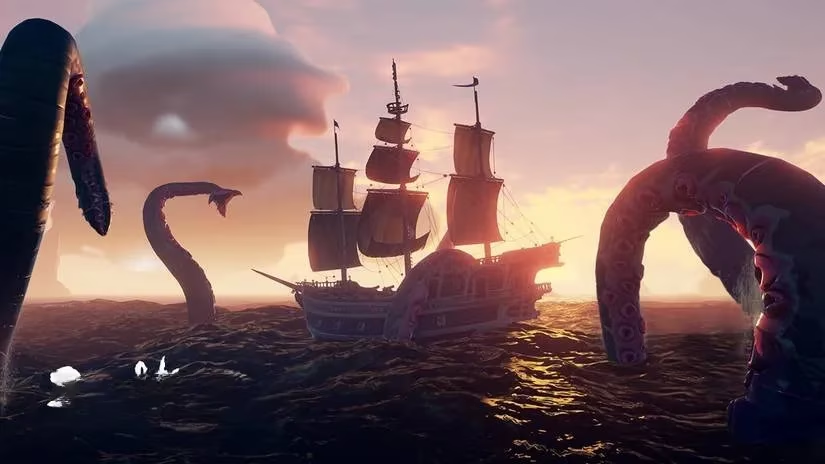
The Heart of the Hunt: Loot That Matters
This might be the biggest shift in philosophy. In Sea of Thieves, all that gold you plundered mostly bought cosmetic changes—new sails, fannier hulls. It looked great, but it didn't change anything. Your ship didn't get stronger or faster. Skull and Bones is flipping that script entirely.
Here, loot is power. Finding treasure means you can meaningfully upgrade your vessel:
-
Make it bigger to withstand more punishment.
-
Make it faster to chase down prey or escape danger.
-
Make it stronger to dominate naval engagements.
This creates tangible stakes. That chest isn't just for show; it's a direct step toward becoming the most feared captain on the high seas. Sure, this might mean a new player in a basic sloop could run into a veteran in a fortified frigate. Some might call that unbalanced. But I'd argue that's just... pirate life. It encourages cunning, stealth, and picking your battles wisely. It makes the world feel dangerous and real.
A More Tactical Tide
From what we've seen, Skull and Bones is aiming for a tone that's grittier and more strategic than its cartoonier predecessor. This isn't just about sailing and shooting; it's about commanding. Key tactical elements appear to include:
| Feature | Expected Impact |
|---|---|
| Fleet Building | Command multiple ships, not just one. |
| Ship Ramming | A high-risk, high-reward close-quarters tactic. |
| Wind Positioning | Using the environment to gain a combat advantage. |
It's about feeling like a naval commander, where every decision, from the angle of your approach to the timing of your broadside, matters. The wind isn't just background noise; it's a tool.
So, as I look ahead from 2026, Skull and Bones represents more than just another game release. It's the culmination of a long, patient development, a response to a genre's growing pains, and a promise of a deeper, more consequential pirate fantasy. It's been a long wait on the dock, but the flags are flying, and the horizon has never looked clearer. The sea is calling, and this time, it sounds like it means business. 🏴☠️