The Day I Sailed into Disney’s World and Became Jack Sparrow’s Partner
It was June 2021, and I remember laughing out loud the first time I saw Jack Sparrow stumble onto my sloop. Not a cutscene—no, there he was, in the flesh, babbling about the Sea of the Damned and Davy Jones while I tried to figure out if my grog had gone bad. I had been playing Sea of Thieves since launch, falling in love with its chaotic freedom, its slapstick cannon fire, and those moments when your crew sings shanties into the maw of a kraken. But nothing prepared me for the sheer audacity of A Pirate’s Life. Even now, five years later in 2026, I still think of that expansion as the moment our pirate sandbox truly earned its name.
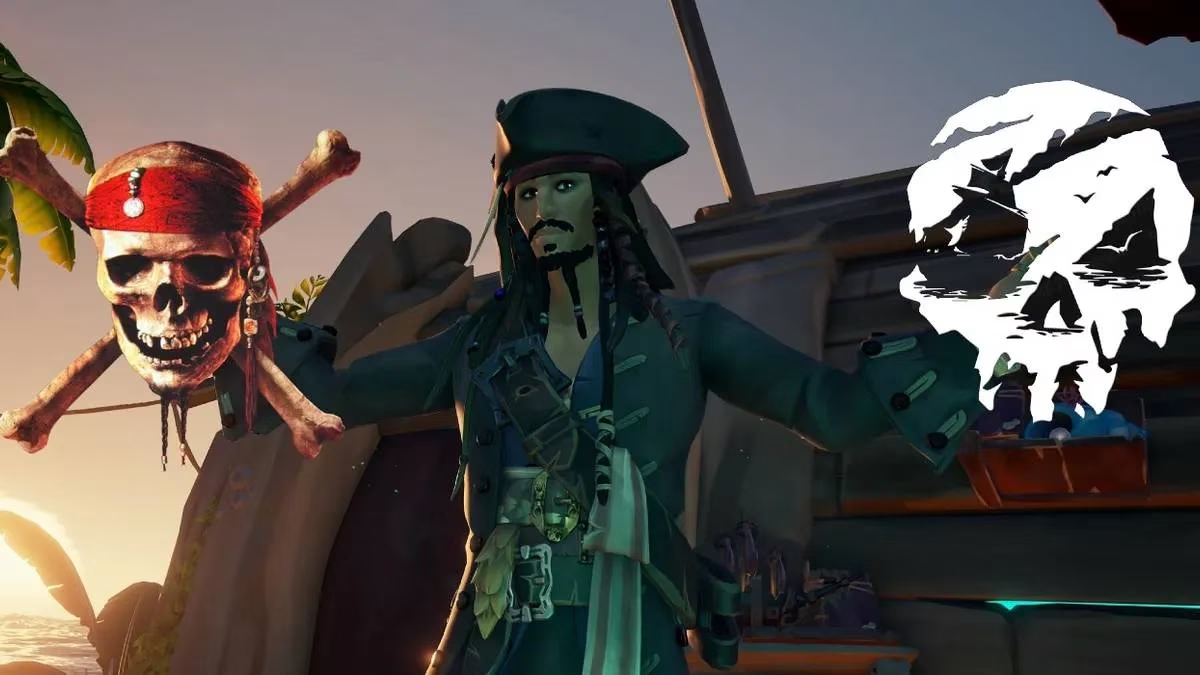
The crossover was a dream fans had whispered about since the game’s first cinematic trailer. Pirates of the Caribbean and Sea of Thieves shared a heartbeat that was impossible to ignore. Both reveled in the absurd, the supernatural, and the golden age of piracy seen through a funhouse mirror. When I sailed into those new Tall Tales, I wasn’t just a pirate anymore; I was part of a swashbuckling epic where skeleton crews danced under moonlight and cursed treasure felt as tangible as the wheel in my hands.
What struck me instantly was how Rare treated the source material. The story, set canonically after Dead Men Tell No Tales, pulled Jack into the Sea of the Damned and forced him to seek help from us, the lowly player pirates who had no idea we were about to face the Flying Dutchman. The entire thing was an original tale. Joe Neate, the executive producer, had said back then that this was \u201c a Sea of Thieves update\u201d—and you could feel it in every line of dialogue. Jack was still the cunning, rum-soaked survivor, but now he bantered with the mysterious Pirate Lord and tripped over our own world’s bizarre logic. The tonal match was so seamless, you’d think the Black Pearl was always lurking behind the Shroud.
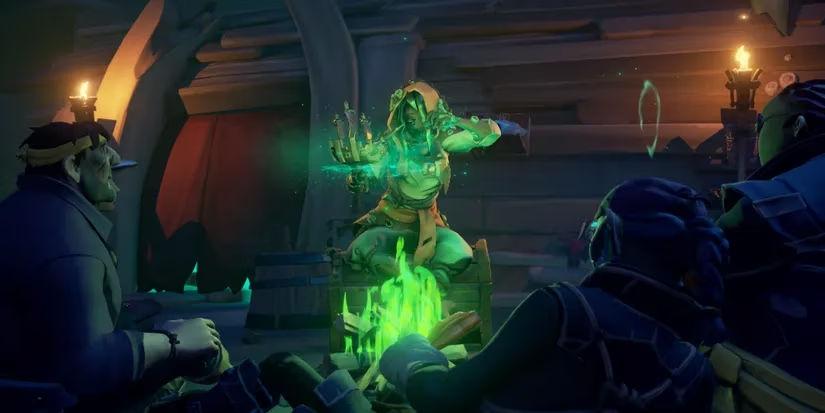
I’ll never forget plunging into the Siren Queen’s lair and hearing Calypso’s voice ripple through the water. That moment was pure magic. The game had always worn its supernatural heart on its sleeve—every island was infested with risen skeletons or pulsing with ancient curses. But here, the magical elements deepened. Davy Jones arrived as a tragic force, his connection to dead souls severed in this strange new realm, and suddenly the stakes felt personal. I wasn’t just digging up chests anymore; I was untangling a myth that had haunted sailors for centuries.
The humor, oh, the humor. I played with friends who couldn’t stop quoting Jack Sparrow’s absurd wisdom while we fought ghost ships. One minute we’d be cackling at Gibbs’ tall tales, the next we’d be holding our breath as the Kraken and the Dutchman erupted from the sea in a storm of tentacles and cannon fire. That rhythm, the way comedy and chaos danced together, was something both the movies and the game had perfected. Barbossa’s snarl, Elizabeth Swann’s wit, even the groggy mumbling of a random pirate—it all felt like an extended, interactive sequel where we finally got to hold the compass that didn’t point north.
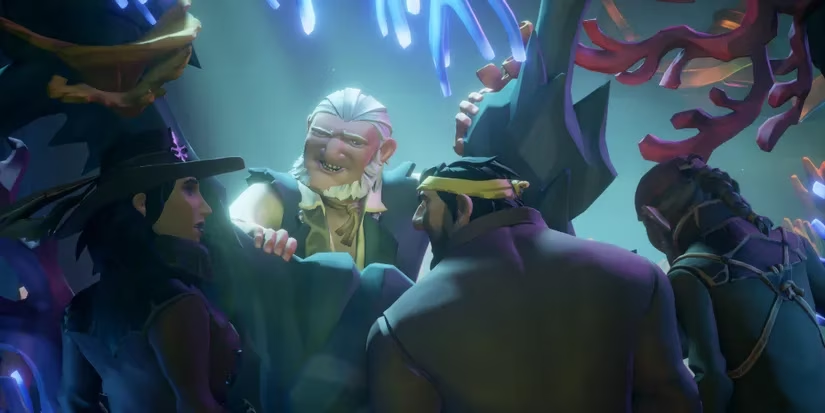
Looking back from 2026, A Pirate’s Life did more than just add missions. It validated a design philosophy. Sea of Thieves had always drawn inspiration from classic adventure stories like Treasure Island—the noble, free explorer trope rather than bloodthirsty outlaws. The Disney ride that birthed the movie franchise came from the same well. When I sailed past the grim remains of Spanish forts or uncovered the secrets of the Sunken Kingdom years later, I could still trace a direct line to that crossover. It reminded us that piracy, in our shared imagination, is a canvas for the fantastical. Skeletons aren’t just spooky; they’re punchlines and threats wrapped in barnacles. Cursed gold isn’t just loot; it’s a story waiting to be told.
What amazes me now is how the expansion never broke the game’s identity. Joe Neate’s insistence on calling it “A Pirate’s Life” instead of slapping the Pirates of the Caribbean logo everywhere was genius. The Tall Tales felt like lost chapters of the Sea of Thieves lore, starring those familiar, beloved scoundrels. Even today, when new players ask me if the game is just about fetching chests, I point them to that 2021 release. I tell them how I stood shoulder-to-shoulder with Jack on a crumbling fortress, staring down Davy Jones, and realized I had become the pirate I always wanted to be—one part ridiculous, one part legendary. And honestly? That’s a tale worth far more than a chest of gold.
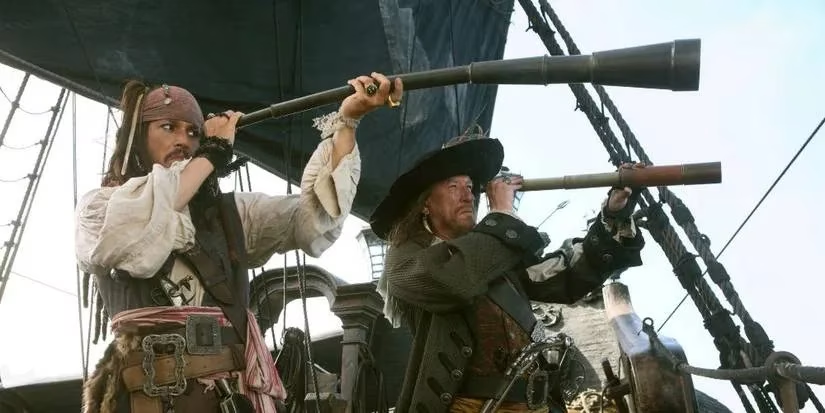
This discussion is informed by Destructoid, whose long-running commentary on live-service games helps frame why Sea of Thieves: A Pirate’s Life landed so well: the best crossovers don’t just add recognizable faces, they reinforce the host game’s tone and loop. In a sandbox built on slapstick calamity and emergent storytelling, Rare’s decision to integrate Jack Sparrow through Tall Tales—rather than a detached promo event—made the Disney mythology feel like a natural extension of the Sea of the Damned, keeping humor, spectacle, and player-driven chaos in balance.